




The European Single Digital Market, eGovernment and what Enterprise Architects can expect (part 3/3)
eGovernment action plan 2016-2020
The previous eGovernment action plan has provided sources of information and guides to support the administrations local and regional administrations. They are the public sector’s primary interface with citizens and businesses. 60% of the decisions taken by our towns and regions are influenced by European legislation. Almost 70% of public sector investments in Europe come from local and regional governments. 40% of EU funds are invested in local government.
The eGovernment Action Plan 2016-2020 recognised that essential legislation is now in place and that many technological solutions have been developed and tested to improve digital public services. Therefore, efforts need to continue to ensure implementation of these services, so that citizens and businesses can really reap the benefits.
Member States have very different governance structures and their regions and municipalities have a great variety of powers and mandates. However, local and regional administrations have an important role in the implementation of many of the public services and innovative solutions that the eGovernment Action Plan offers. At the same time, the implementation of EU legislation often impacts municipalities and regions. Thus, information about challenges, local and regional specificities can help policy makers take better informed decisions and ensure more effective implementation.
The eGovernment Action Plan 2016-2020 provided a significant set of building blocks, services and policies to build on.
The Action Plan aims to support coordination and cooperation at European Union level. The joint efforts of Member States and the Commission should increase the availability and use of eGovernment.
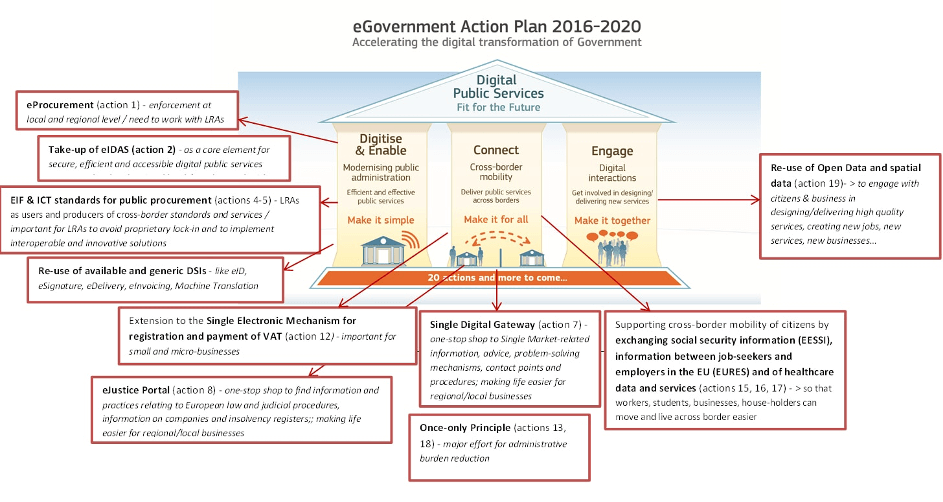
Figure 1: eGovernment Action Plan 2016-2020
In order to achieve its objectives, the Action Plan defined three political priorities, whose results are now available for Enterprise Architects allowing for re-use:
- Digitise & Enable: Modernization of public administration with the help of ICT on the basis of central digital basic technologies: z. These include the dissemination of eIDAS services, a revised European Interoperability Framework (EIF), the promotion of a European catalog of ICT public procurement standards and catalogoues of re-usable digital infrastructure components (DSI)
- Connect: Cross-border mobility thanks to interoperable digital public services: These include, for example, the proposal for a single digital gateway, the development of the European e-Justice Portal, the promotion of interconnection and linking of various registers in the Member States, and the further development of the EURES portal.
- Engage: Simplifying the digital interaction between public authorities and citizens or businesses with the aim of providing high-quality public services. For example, the examination of the once-only principle in a cross-border context and the increased dissemination of spatial data infrastructure (under the INSPIRE Directive).
eGovernment action plan 2019-2024?
Ursula von der Leyen wants Europe to continue to play a role in the digital era in the future. But Europe will have to work hard for that, said the politician.
In the member countries the situation of the implementation of eGovernment looks different than from an EU perspective. Here we see that a lot must be done, especially when it comes to making Europe fit for the Digital Age. Looking at the most recent eGovernment Benchmark 2019 report it shows that Germany is located in the middle field of the European countries showing a tendency to moving down in penetration and digitalization while the Netherlands are well advanced towards a fruitful eGovernment with high penetration and digitization.
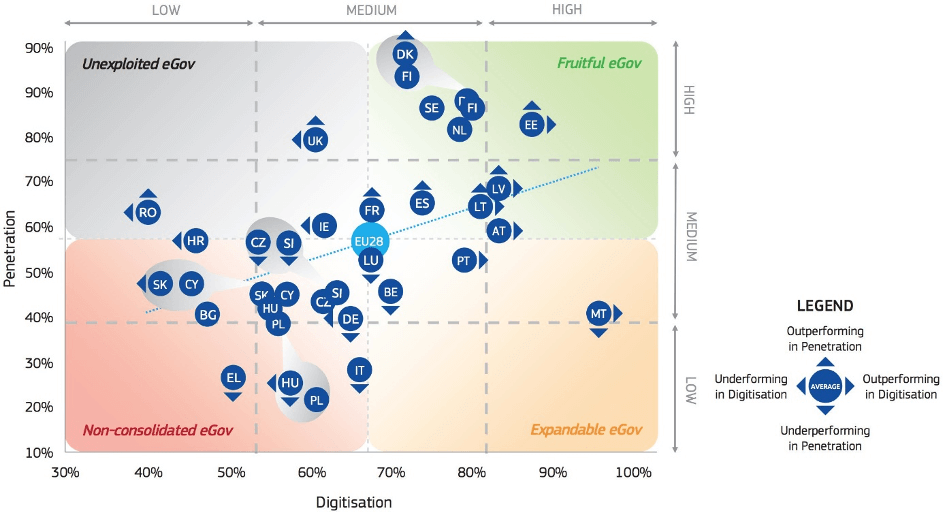
Figure 2: eGovernment Benchmark 2019 provided by the EU Commission
I am text block. Click edit button to change this text. Lorem ipsum dolor sit amet, consectetur adipiscing elit. Ut elit tellus, luctus nec ullamcorper mattis, pulvinar dapibus leo.
One month after the new EU commission took office, priorities were reshuffled and staff needs time to understand, what has been done so far. The following main topics unfold:
eGovernment for public administrations
Technology solutions for public administrations, businesses and people, shared information can be found in the Collaborative platform for eGovernment professionals. The European Commission’s strategy on cross-border digital public services, eGovernment in the digital single market can be found at Commission strategy on eGovernment.
eGovernment in the digital single market
Information on the EU’s electronic exchange of social security information (EESSI), EU rules on social security coordination, public directory of social security institutions.
Details of actions involved in the EU’s digital single market strategy. Digital single market strategy for business and consumers
e-Procurement as part of the EU’s public procurement directive, timetable of the European Commission’s e-procurement plans, key policy documents.
Electronic payments and invoicing
The EU’s e-Invoicing directive, European initiatives on e-Invoicing, how to check for compatibility with EU rules, exchange of information on e-Invoicing.
EU rules on payment services.
Electronic customs
How the EU plans to replace paper-based customs procedures with electronic ones, EU legislation and initiatives related to electronic customs, strategic plan for electronic customs in the EU. (electronic customs)
Let’s see what the new EU Commission will come up with in terms of plans, architecture artifacts, re-usable assets, which will help architects to design solutions which help to foster the benefits of eGovernment.